High performance habits are less glamorous than the lists suggest. They are small routines done on a schedule, aimed at one thing that matters, and kept up on days you don't feel like it. Nothing here is a secret.
In short: What holds up is one priority, a fixed cue, practice on the hard part, and enough recovery to repeat it. Habits took 66 days on average to settle, and no routine guarantees the result.
What people want when they search this
Most people typing the phrase want a short list. Wake early, cold shower, journal, repeat. They want to know what the people at the top do, so they can do it too.
The trouble is that those lists are mostly written backwards. Someone is already successful, and their morning gets described as the cause. A routine seen in a winner is not proof that the routine produced the win.
So a better question is this: which habits are worth building because the research on how habits work supports them, whoever happens to do them?
Start with one priority, not ten habits
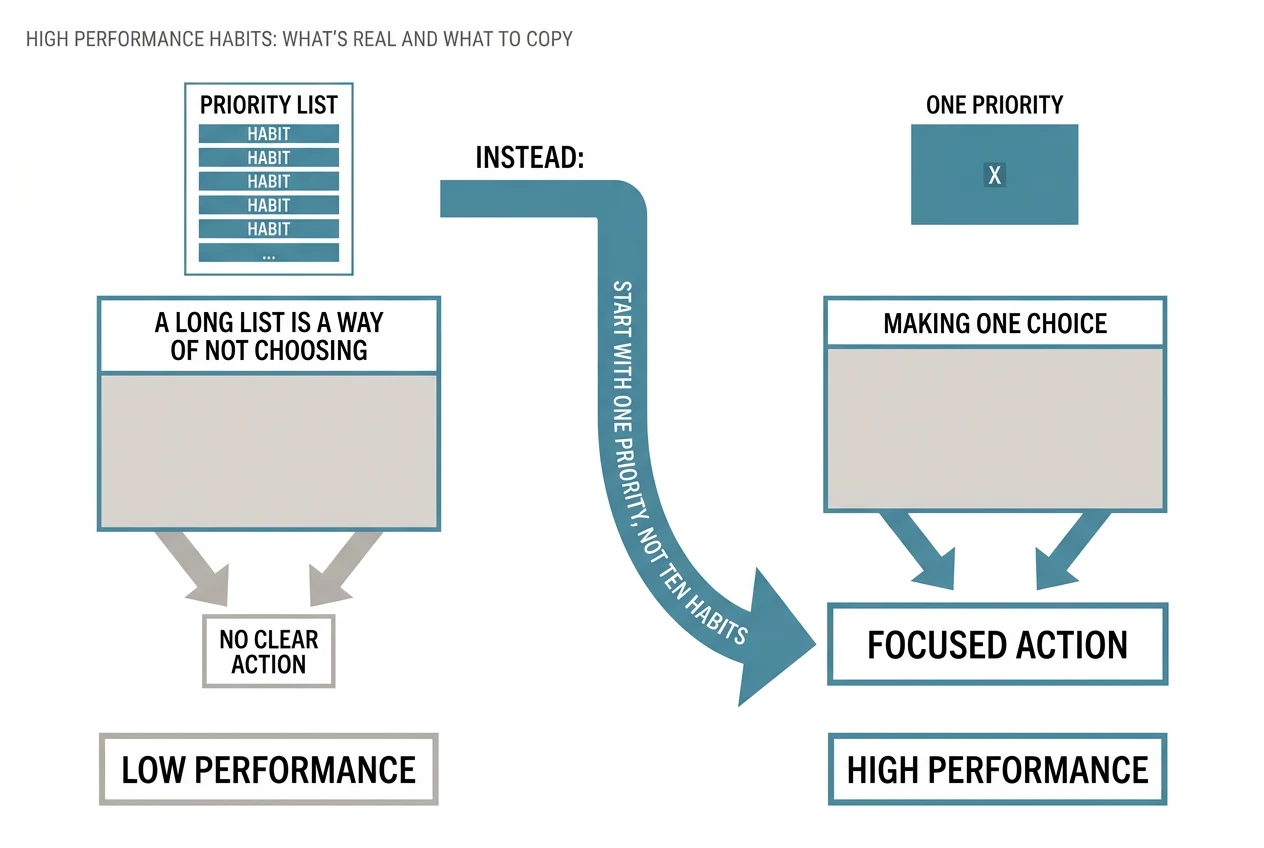
A long list of habits is a way of not choosing. Ten new routines compete for the same attention, and most lose.
Pick one thing you want to get better at or finish, and make every habit serve it, because a habit that serves nothing in particular is the first one to go. If the thing is a book, the habit is a writing session. If it's fitness, the habit is a workout you will actually turn up for.
This is also why begin with the end in mind belongs near the start of any habit plan. The habit is the how. You need the what first.
Give the habit a cue
A habit that waits for motivation is a mood. A habit tied to a cue is a routine.
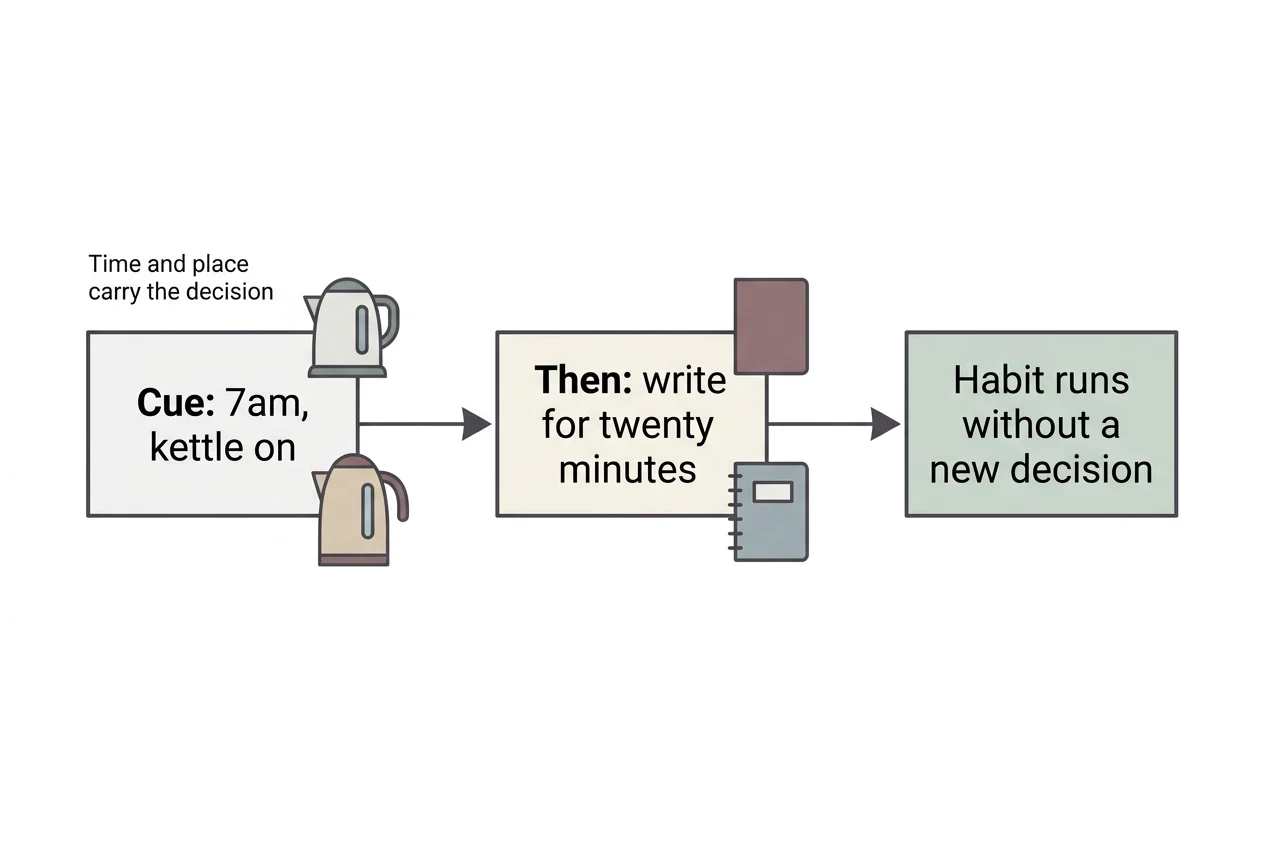
The technique with the most research behind it is the if-then plan: if it's 7am and the kettle is on, then I'll write for twenty minutes. The time and place carry the decision, so you don't have to make it again each morning. I went through the evidence, and its limits, in mind tricks that have research behind them.
One limit is worth repeating here. The plan helps people who already want the thing. It makes wanting easier to act on. It doesn't create it.
Give it weeks, not days
You'll often hear that a habit takes 21 days. That number comes from a 1960 book about patients adjusting to a new face, not from habit research.
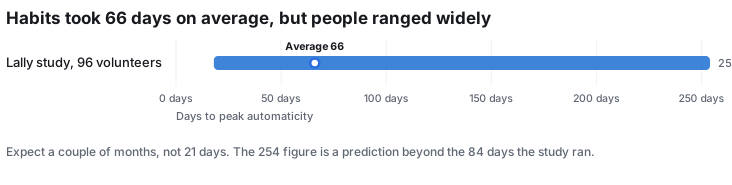
The better-known study is Lally and colleagues at University College London. They followed 96 volunteers who each picked one new eating, drinking or activity habit. On average it took 66 days to reach its peak automaticity, and people ranged from 18 to a predicted 254 days. That top figure is an extrapolation beyond the 84 days the study ran.
Two other things from that study are kind to anyone who slips. One missed day made little difference to later progress. But too many misses, even scattered ones, lowered how automatic the habit ever became.
So the honest plan is to expect a couple of months and to protect the repeats. Be wary of the study's limits too: the habits were small, the ratings were self-reported, and the 66 days is an average, not a deadline.
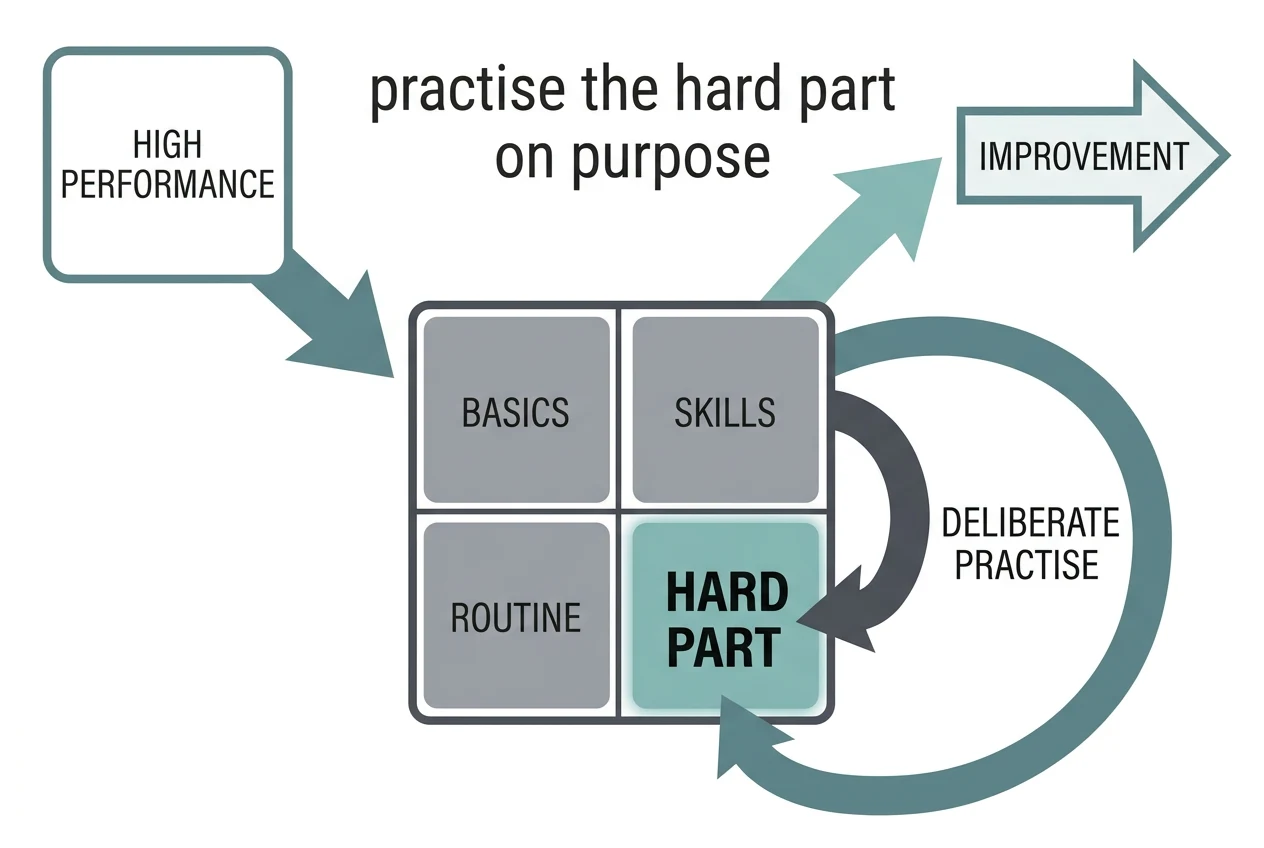
Practise the hard part on purpose
High performers are often described as people who practise a lot. That's partly right, but the details matter.
The famous version comes from Ericsson's early study of student violinists, which linked skill to accumulated hours of deliberate practice. It grew into the popular "practice makes experts" idea. When Macnamara and Maitra re-ran the study, they did not replicate the core finding that practice hours lined up with each skill level, though practice still mattered. I couldn't open the full paper, so I'm relying on its published summary.
What survives is modest and useful. Work on the part you find hard, not the part you enjoy. Do it in a block, with your phone away. Stop when the quality drops. It isn't a formula for greatness. It's a better way to spend an hour.
Recovery counts as a habit
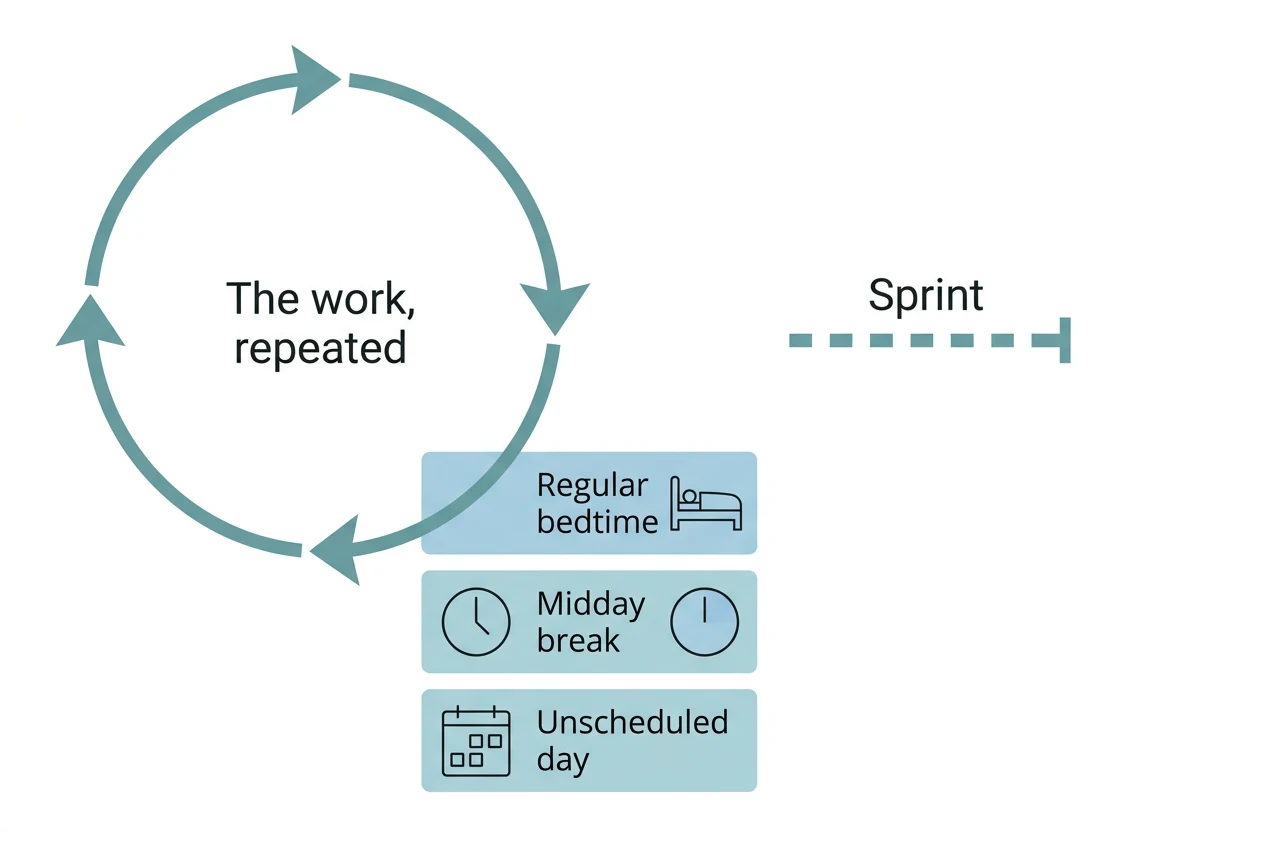
The lists forget this one. A routine you can only keep for two weeks isn't high performance. It's a sprint.
Build in the dull things that let you repeat the work: a regular bedtime, a real break at midday, and a day that isn't scheduled. These are the habits that keep the others alive.
If your head is the limit, the five-minute sit in how to quiet your mind is a cheap place to start.
Track it without turning it into a contest
Writing down that you did it is the simplest feedback there is. A tick on a calendar is enough.
Keep the count private and keep it kind. A streak is a record, not a verdict, and one broken day doesn't undo the rest. The point is to see that you showed up, not to beat anyone.
What high performance habits can't do
They can't promise the result. Plenty of people keep every habit here and still don't get the job, the time, or the win, because luck, timing and other people matter too.
They also can't be borrowed whole. Someone else's 5am routine was built around their life. Take the principle, which is one priority, a cue, repeats and recovery, and fit it to yours.
Start with one habit and one cue. Do it for a few weeks. Then add the next.