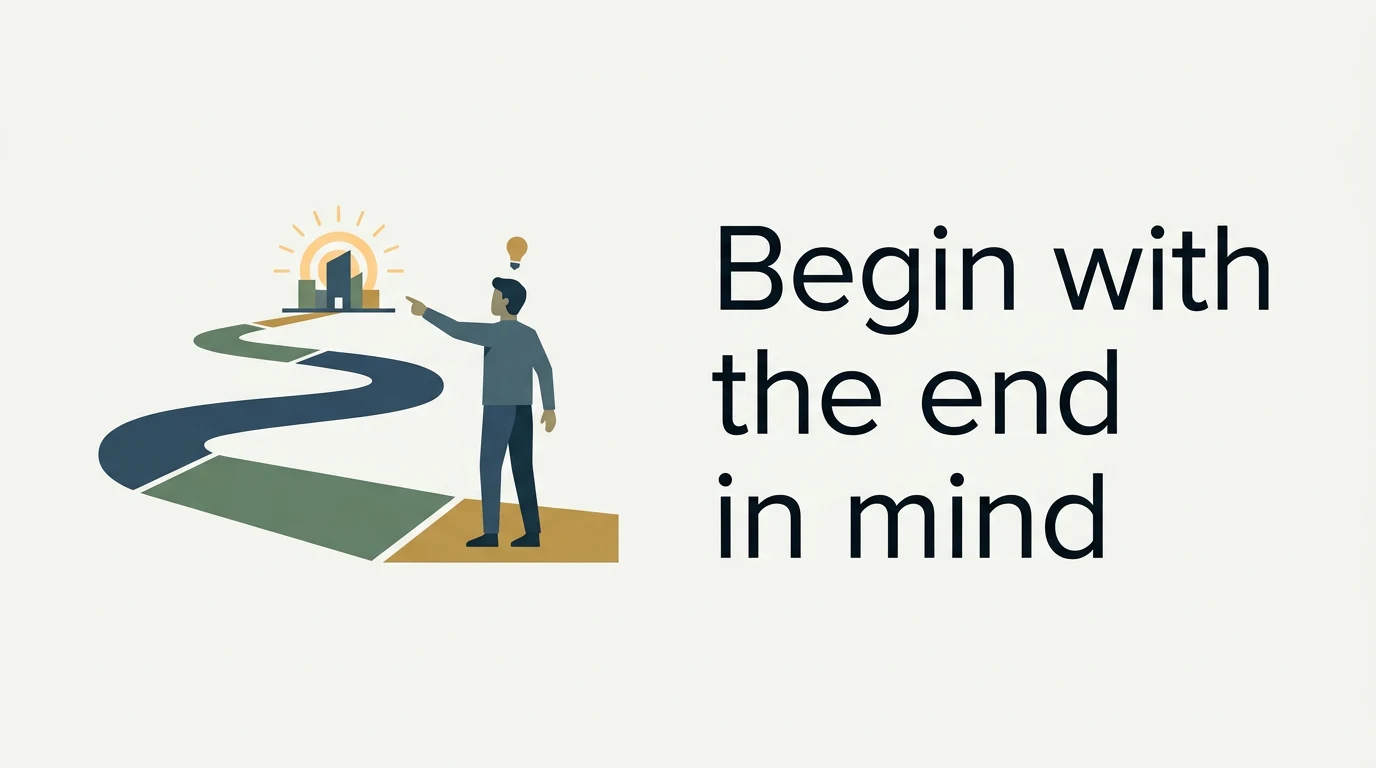
Begin with the end in mind: decide what you want the finished thing to look like before you take a single step towards it. Then measure every step against that picture. It's an old idea with a simple test. Where is this heading?
In short: Begin with the end in mind means picture the result first, then choose each step to fit it. It's Habit 2 of Stephen Covey's 7 Habits. You can try it today with one page and one honest question.
What does begin with the end in mind mean?
It's the second habit in Stephen Covey's The 7 Habits of Highly Effective People. Franklin Covey, the company that carries his work on, sums the habit up in one line: "Define clear measures of success and a plan to achieve them."
The idea underneath is that all things are created twice. First in your mind, then in the world. Think of a house. Nobody pours a foundation and hopes; you draw the plan first, room by room, and the building follows the drawing.
Your days work the same way, whether you plan them or not. If you don't draw the first version yourself, someone else's picture fills the gap, because a gap never stays empty. Franklin Covey's page puts it plainly: without a deliberate picture of who you are and what you want, other people and circumstances shape your life by default.
That's the part worth sitting with. It isn't a rule about being organised. It's a question about who is holding the pen.
The funeral exercise
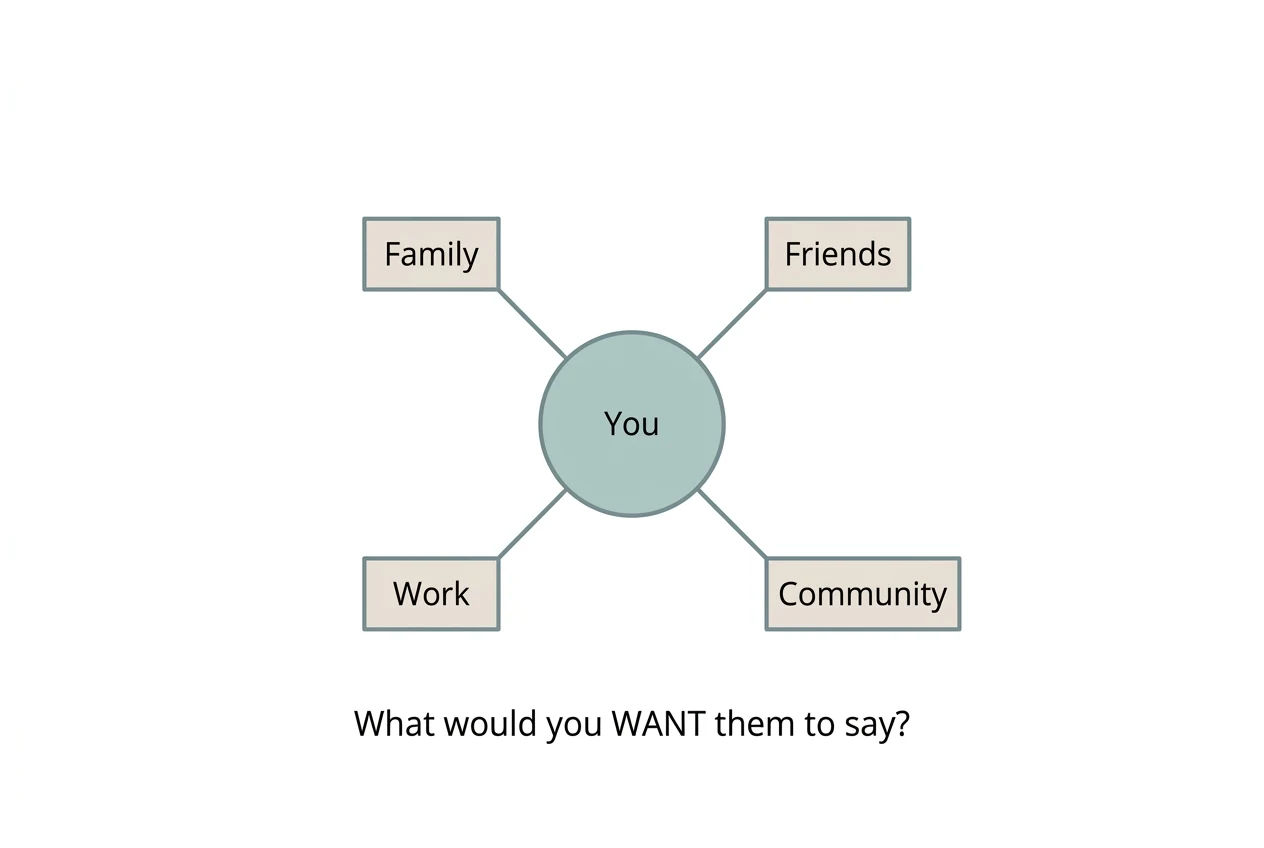
Covey made the idea concrete with a strange little exercise: imagine your own funeral. One summary of the chapter quotes the prompt as "This is your funeral, three years from today… There are to be four speakers." They come from different parts of your life: family, friends, work, and the wider community.
Then ask what you'd want each of them to say about you. Not what you think they would say. What you'd want.
It sounds morbid, and for a minute it is. But the point isn't the funeral. The answer shows you what you value when nobody is watching and nothing is for show, and most people find the list is shorter and quieter than their to-do list.
Why it's easy to get backwards
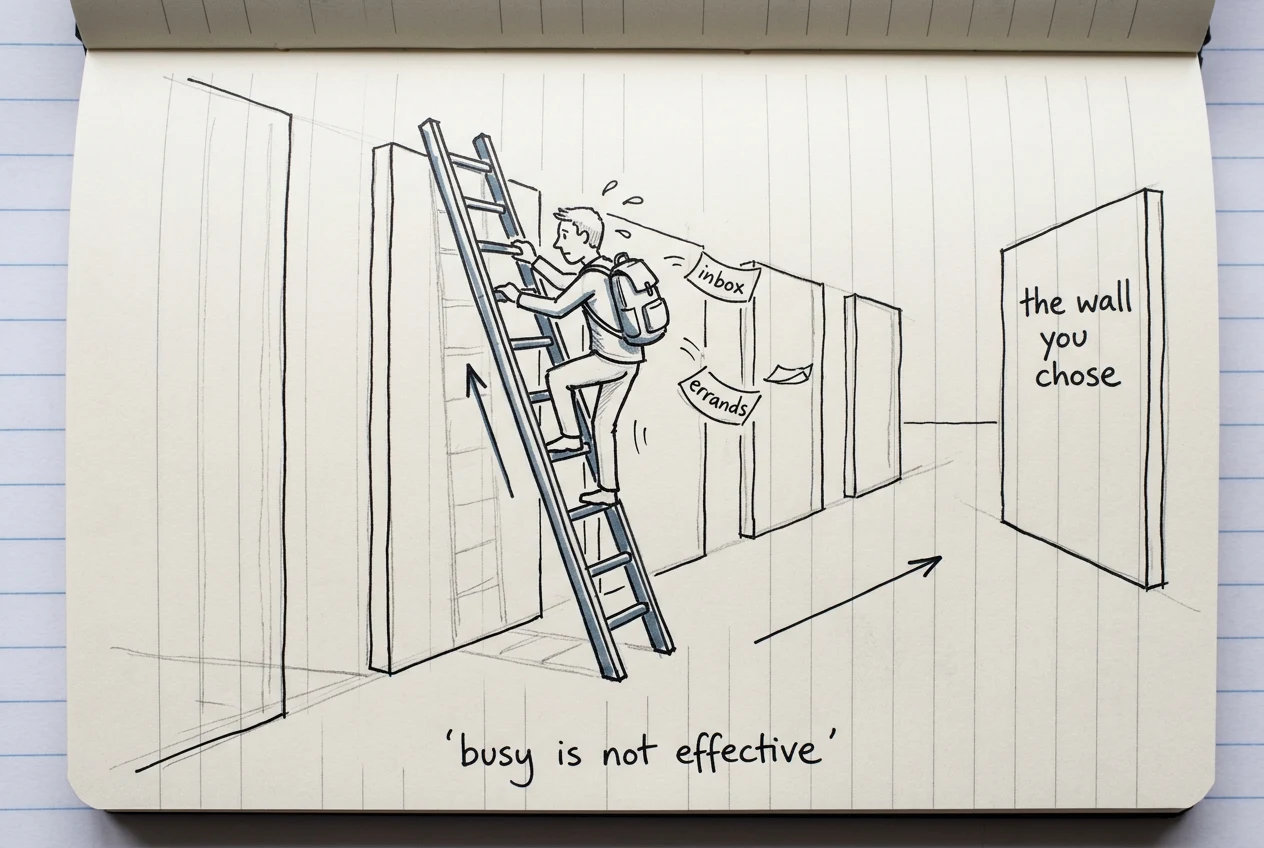
Most of us start with the next thing. The inbox, the errand, whatever is loudest. We climb well and fast, and only later check which wall the ladder was leaning on.
Covey's point is that being busy and being effective aren't the same. A day can be full and still go nowhere you'd choose. If that sounds familiar, nothing is wrong with you. A day shows up already full of other people's requests, and nobody hands you a blank page.
There's a second trap. Whatever sits at the centre of your life tends to steer it, and one summary of the chapter lists the usual centres: family, friends, money, work, pleasure, church, yourself, or principles. Covey argued that each has a cost. Put work at the centre and your worth rises and falls with your job. Put money there and it follows your bank balance. He treated principles as the steadier choice. You don't have to agree. Just notice which centre you actually live from.
How to begin with the end in mind today
You don't need a retreat. You need one page and a quiet quarter of an hour.
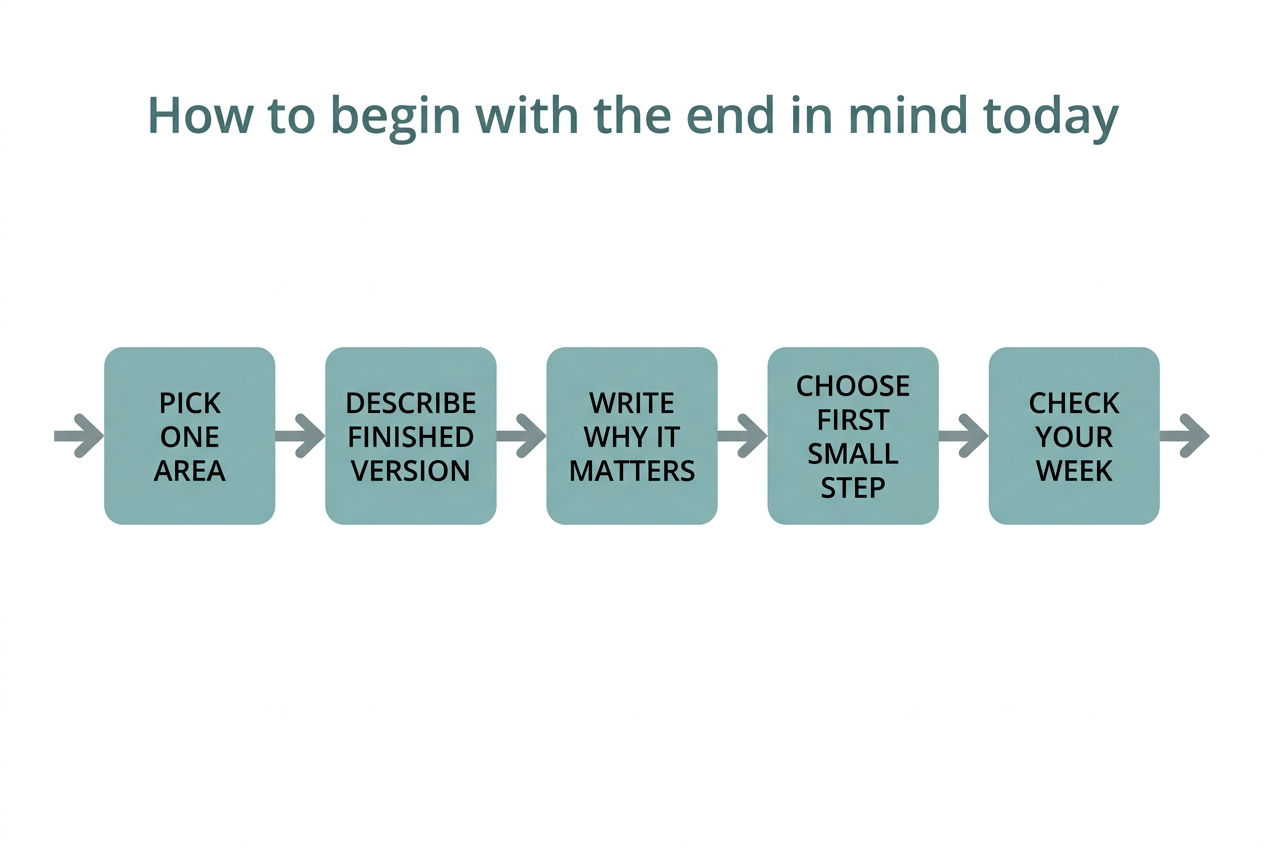
- Pick one area. Not your whole life. Work, a relationship, a health habit, a project you keep circling.
- Describe the finished version. Write it in the present tense, as though it's already true. What's it like? What are you doing? Who's there?
- Write down why it matters to you. Not why it should. If the honest answer is "because someone expects it", that's worth knowing before you spend a year on it.
- Choose the first small step that fits the picture. Only that one.
- Look at your week. Is anything in it pulling the other way?
Step four is where the idea earns its keep. The picture isn't there to impress you. It's there so that when a choice comes up, you can ask whether it moves you towards the picture or away from it.
Covey called the longer version of this a personal mission statement, and he described it as covering who you want to be, what you want to do, and the values underneath both. Franklin Covey calls it one of the best ways to put Habit 2 into practice. One tip from the same summary: write your own, don't borrow someone else's. A borrowed one will read well and change nothing.
Where this meets manifesting
If you've been drawn to manifesting, this will sound familiar. Picture the outcome, hold it, let it guide you. The overlap is real, since both start from the idea that a clear picture comes before the result.
The difference is worth saying out loud. Covey's version asks you to be honest about the cost and then act, because a picture on its own doesn't move anything. Our post on the power of manifesting covers what picturing can and can't do, and the 369 method is one way people keep the picture in front of them each day.
In Manifest, the home screen asks "What do you want?" and wants one thing. Same move as step one above. Pick one, make it clear, then live as if it's yours.
When the picture changes
It will. You might write the finished version and feel nothing, or feel a small no. That isn't failure. It's the exercise working, because you've found out before spending the year.
Some pictures belong to a past version of you, and holding them costs more than letting them go. If that's where you are, writing it down and burning the page is a gentle way to close one before you open another.
In Manifest it's the Let it go feature. You write what you're releasing, and your words land on a sheet of paper.
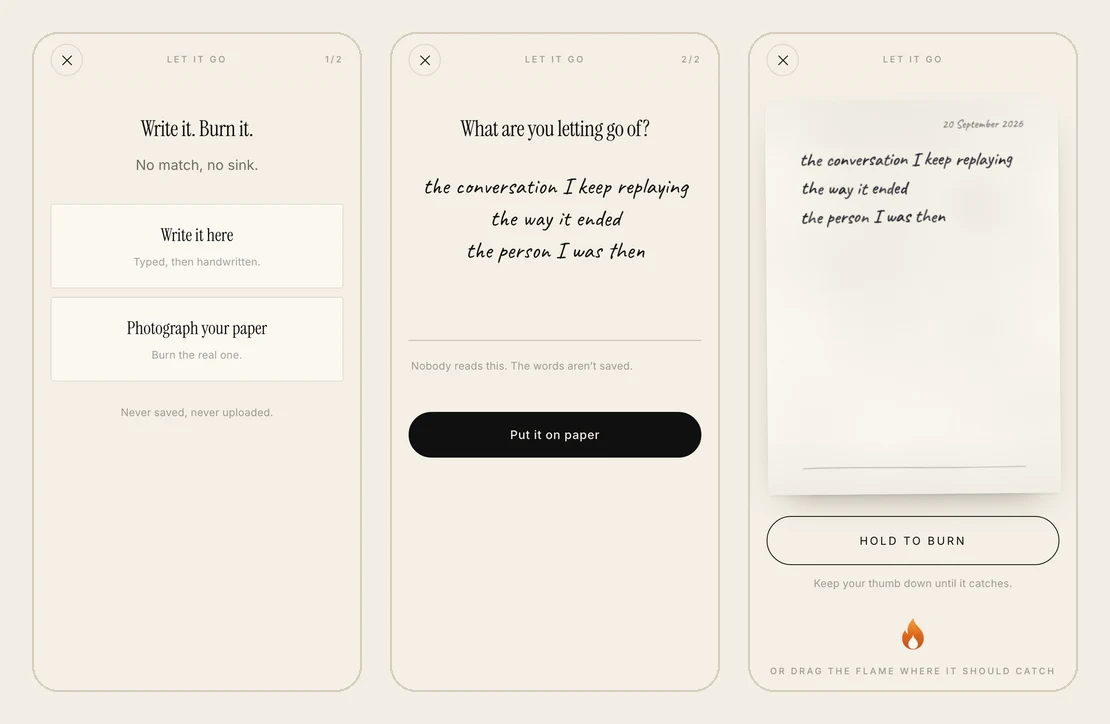
Then you hold the button until the page catches and burns away.
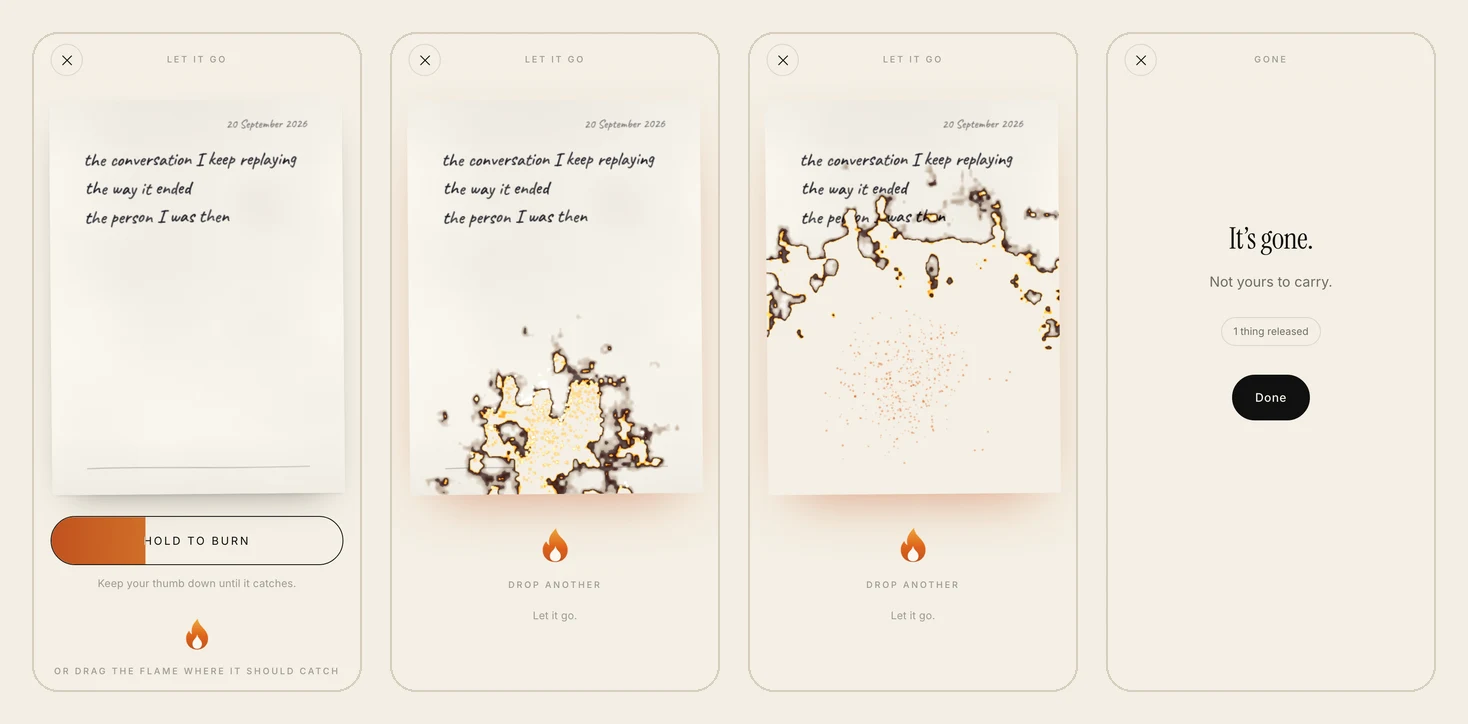
And if you change your mind about the destination, that's fine too. The habit isn't loyalty to a plan. It's a check, now and then, that the plan is still yours.
Start with one page. Write the end. Then ask what the first step is.