By manifesting.online · October 2026
The power of your subconscious mind is mostly the power of what you do without thinking: habits and small plans that run on their own. There's no special level to reach. You choose one thing and repeat it until it needs less effort.
In short: The subconscious isn't a wish machine. Research backs repeated habits and if-then plans. Pair them with one clear wish and a daily practice.
Why this phrase pulls so many people in
"The power of your subconscious mind" is also the title of a book. Joseph Murphy first published it in 1963, and Open Library lists Prentice-Hall among its many publishers. Reviewers describe it as a book about affirmations and visualization, with a lot of positive thinking on top.
So a lot of people searching this phrase want the idea behind the book, because if you feel stuck and someone tells you a hidden part of your mind is holding the key, of course you'd want to find it, and that's a fair thing to want.
Here is the honest version: the idea is partly right and partly stretched.
What the subconscious actually is?
Psychologists don't usually treat it as a vault, because they talk about automatic behaviour, meaning the things you do and think without deciding each time, and feelings run the same way.
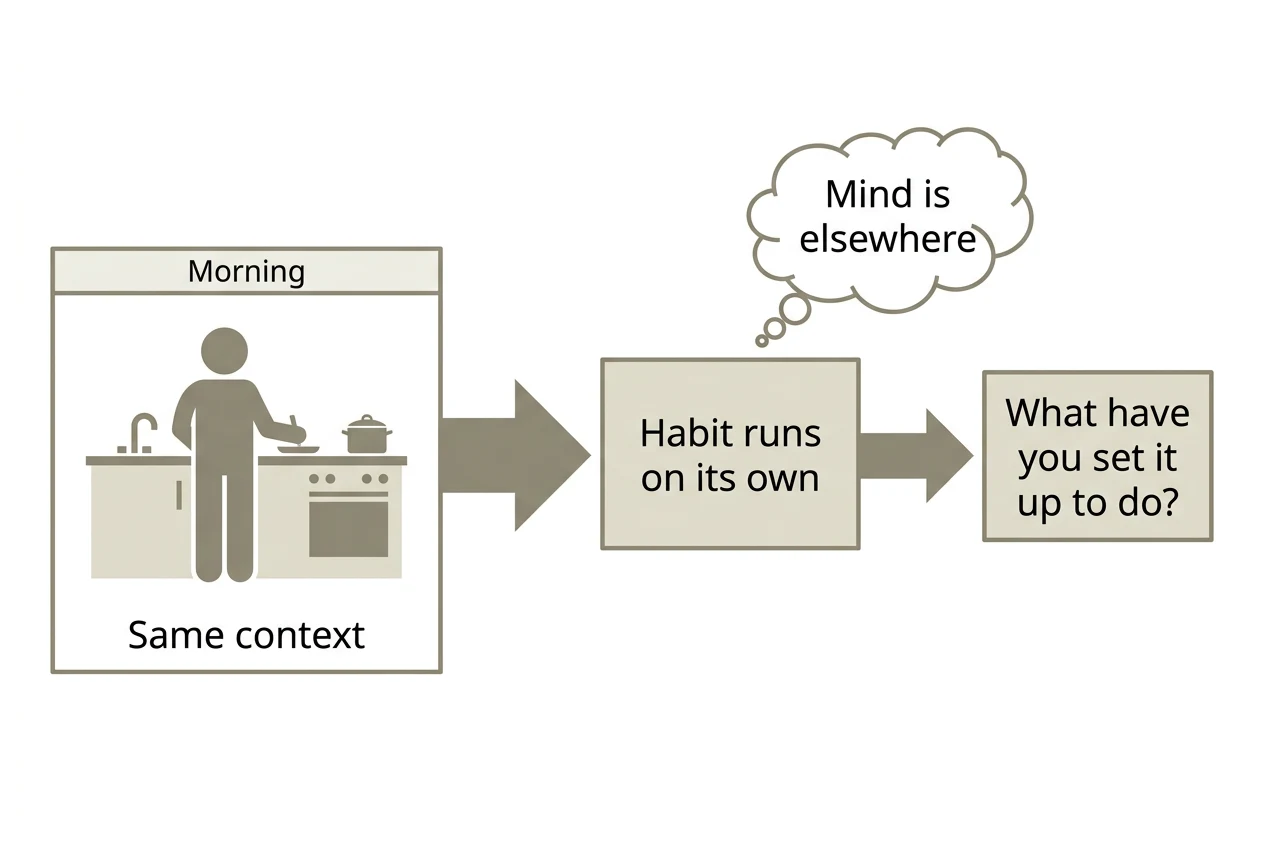
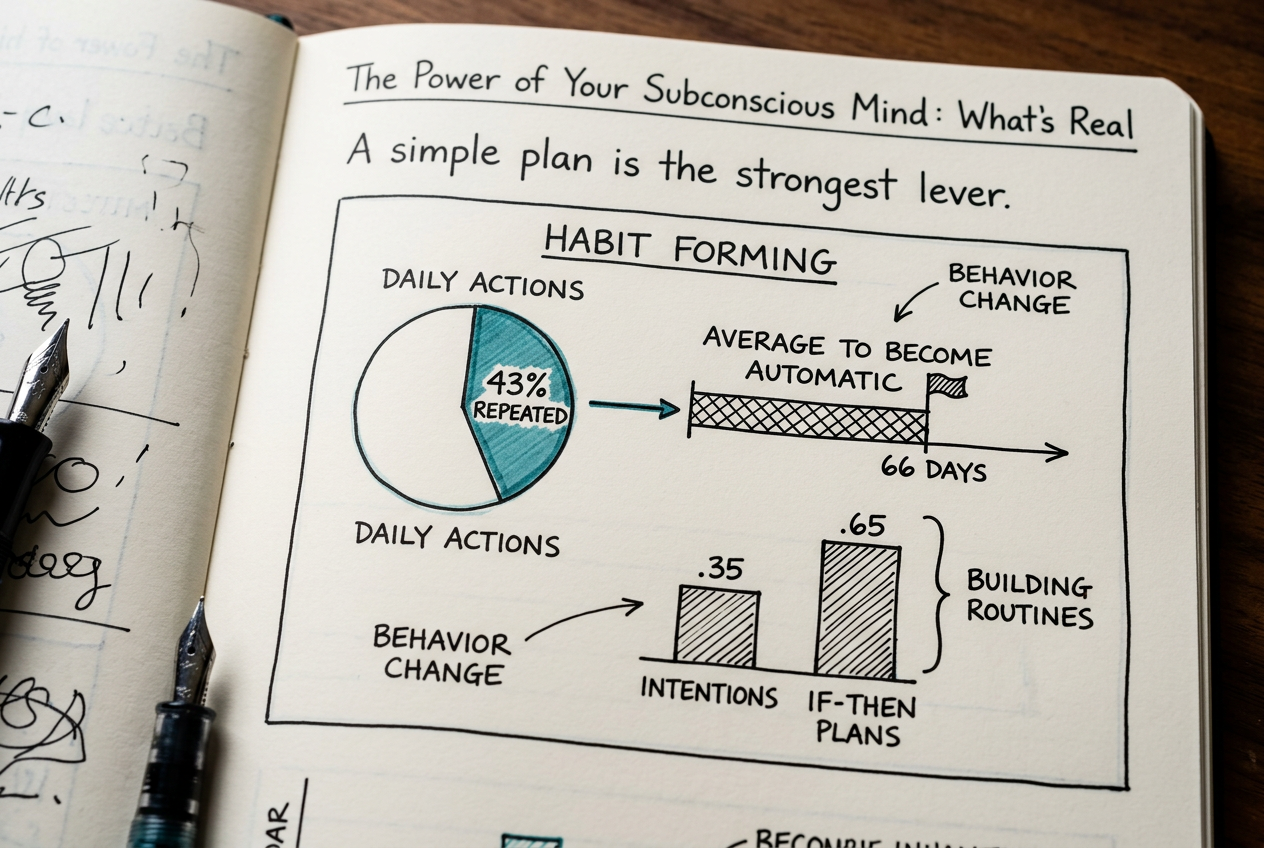
Wendy Wood, who studies habits, says about 43 percent of what people do every day is repeated in the same context. In her 2002 diary studies with Quinn and Kashy, people reported on their day every hour, and when they were doing something habitual they tended to be thinking about something else.
That's the real power.
Most of your day already runs on autopilot. The question is what you've set it up to do.
The power of your subconscious mind: what the research supports
Four findings are worth keeping. Two of them cut against the hype, and I'd rather you hear those first.
Priming a goal didn't hold up
In 2001, Bargh and colleagues reported five experiments in which a goal, set off without people noticing, changed how they performed. It was a famous paper. Then Christine Harris and colleagues tried to repeat it. They ran two experiments, with 98 and 66 people, and found no effect.
So I wouldn't build a practice on the idea that hidden cues quietly steer you to success, because the famous test of it didn't repeat when other people ran it.
Repeating a positive line can backfire
Affirmations are the most common tool in this space, and they come with a catch. Joanne Wood, Elaine Perunovic and John Lee ran a survey and two experiments. People with low self-esteem who repeated "I'm a lovable person" felt worse than people who didn't, while people with high self-esteem felt somewhat better.
The lesson isn't to drop affirmations. Write a line you can half believe, and the words of affirmation guide covers how.
Repetition builds habits, and a missed day is fine
Phillippa Lally and her UCL team had 96 people take up a new daily behaviour. On average it took 66 days to become automatic, and the range ran from 18 days to a predicted 254. The long end is an extrapolation, since the study stopped at 84 days. A single missed day made little difference.
If you're asking how long it takes, the answer is "longer than a week, and it varies". Skipping a day doesn't ruin it.
A simple plan is the strongest lever
Peter Gollwitzer and Paschal Sheeran pooled 94 tests of "if-then" plans. Having a plan like "when X happens, I'll do Y" improved goal attainment, d = .65, over goal intentions alone. That's the finding I'd put most weight on.
None of these shows that a thought moves money or people, and I found no study that does. Luck, the same. The power of manifesting post goes further into why picturing a win works best when you also name the obstacle.
How manifesting helps, and where it stops?
Manifesting, done plainly, is a daily rehearsal. You name one wish, say it as if it's yours, and keep it in view. That's repetition, and repetition is the part of this that has support.
What it can't do is make the outside world match your thoughts, but it can keep you noticing what you want and acting on it, which is a smaller claim and a truer one. If you want the beliefs side of this, the 369 method is one way to repeat a line.
How to build the practice in Manifest?
Manifest is a quiet app with three parts: say thank you, say it's yours, let it go. Nothing you write leaves your phone. Here's how I'd use each part to build the habit side of this, in about ten minutes.
Say it's yours
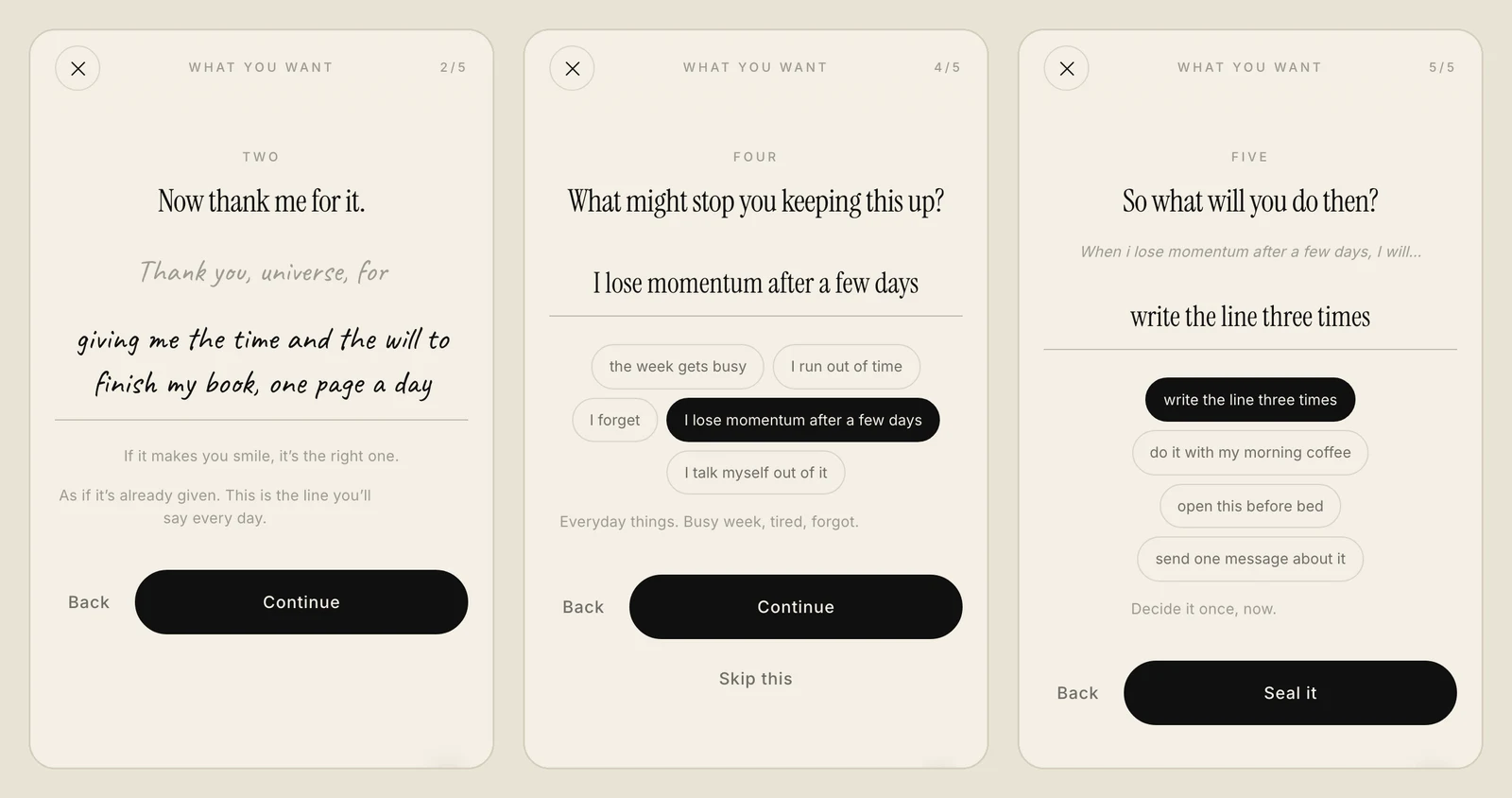
Open the practice flow and write one line, as if it's already given. "Giving me the time and the will to finish my book, one page a day." Keep it believable, for the reason in the 2009 affirmation study above.
The next screens do the work that matters. They ask what might stop you keeping this up, then what you'll do when it happens, and that is an if-then plan: "When I lose momentum after a few days, I will write the line three times."
Let it go
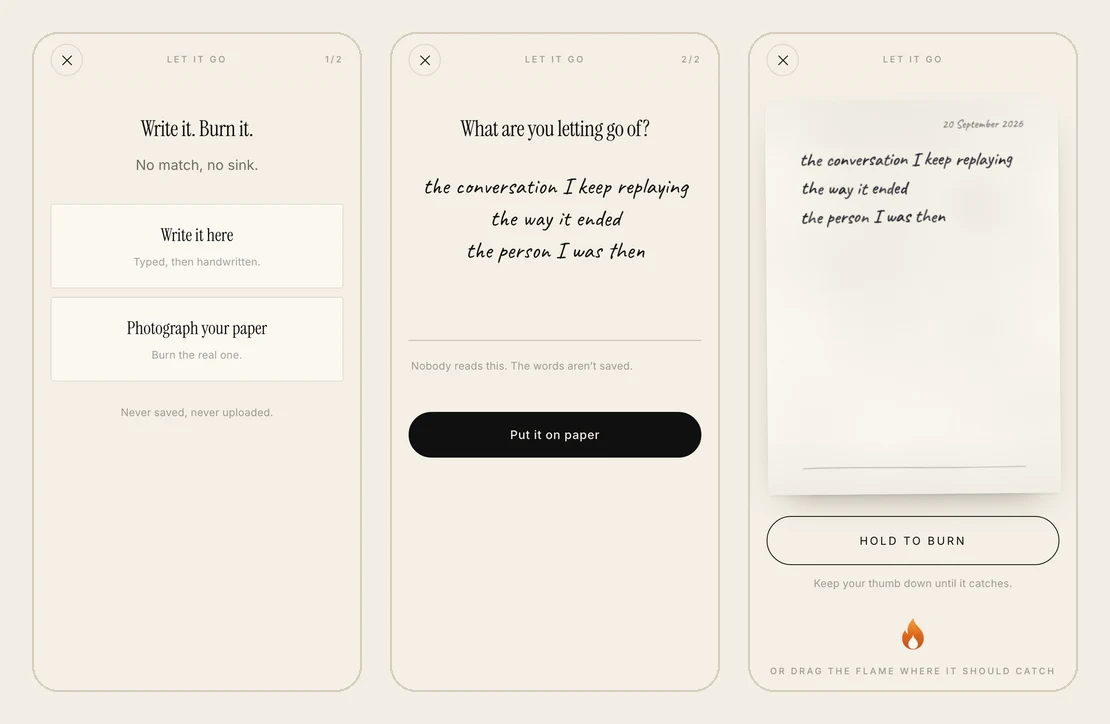
Some days the old thought is louder than the new one. In the let it go flow you write what you're releasing, then hold to burn it. The words aren't saved. It's a small ritual, and it clears room for the line you're repeating. The let it go guide walks through every screen.
Sit with it
Then sit. The meditate page has a timer from 3 to 30 minutes and five background sounds, and it keeps playing with the screen off. Three minutes is enough to start.
Come back tomorrow. Your streak and minutes sat stay on your phone, and there's no leaderboard.
Your first week
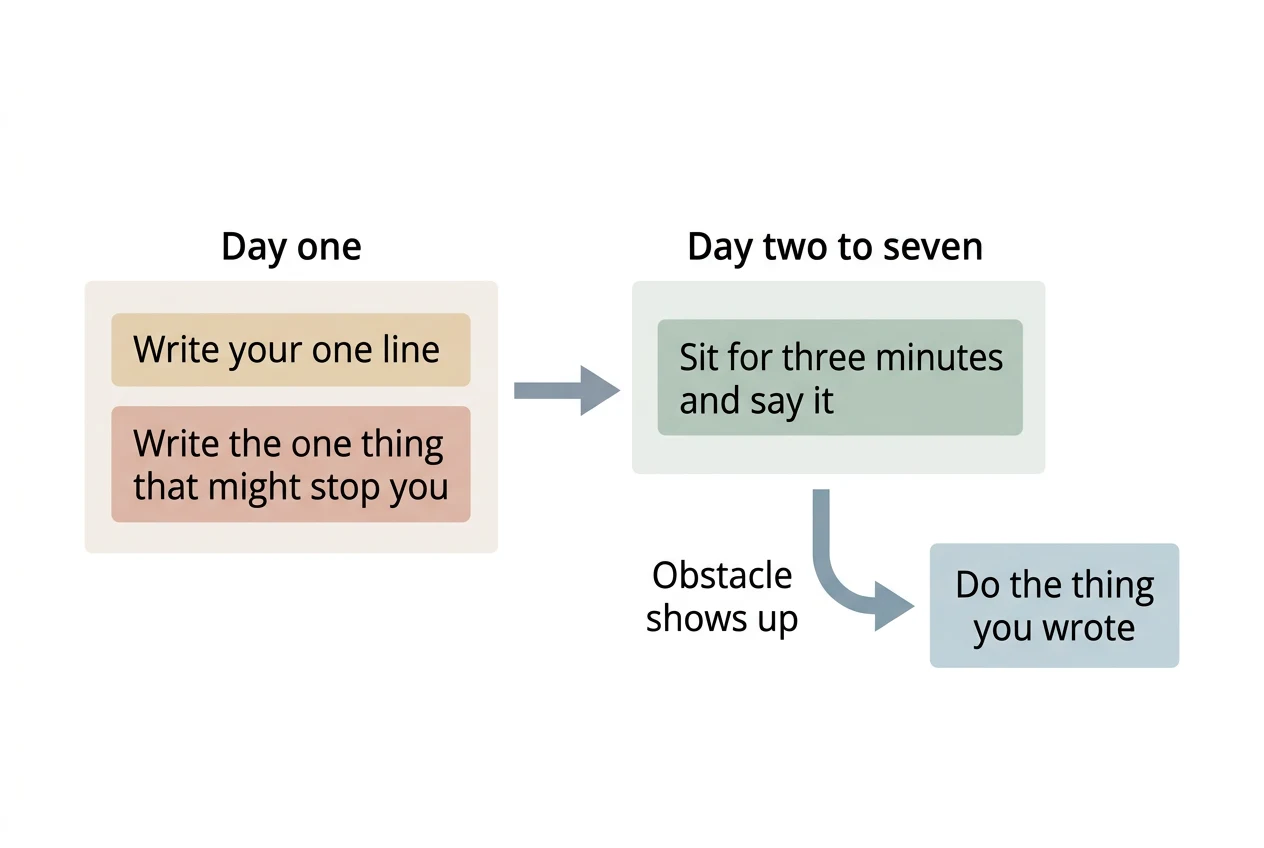
Day one: write your one line and the one thing that might stop you. Day two to seven: sit for three minutes and say it. When the obstacle shows up, do the thing you wrote.
That's a complete practice. It won't promise you an outcome, and it shouldn't. What it gives you is a line you repeat and a plan for the bad day, and those happen to be the parts research can actually see, which is why the few quiet minutes are worth keeping.
Open Manifest and write your line