By manifesting.online · October 2026
The power of manifesting is that it makes you clear about one thing you want and keeps it in front of you until you act. To manifest, you pick one wish, picture it, name what's in the way, and take a small step. It isn't magic, and it works best with the step.
In short: Manifesting means choosing one wish, picturing it, then planning for the obstacle and acting. Pictured alone, success can lower effort. Paired with a plan, it helps.
Why so many people feel pulled to manifest
You've probably heard that manifesting changed someone's life, and you've probably also been told it's nonsense. Both camps get loud. If you're somewhere in the middle, curious and unsure where to begin, you're in a perfectly reasonable place.
Most people who try it aren't after a miracle. They want to stop drifting. They want to know what they actually want, say it plainly, and feel like they're moving. That's a fair thing to want, and it's where manifesting has something real to offer.
So here's the plan. First, how to do it in five steps. Then, what the research says it can and can't do, because that's what decides whether you stick with it.
What manifesting actually is
Manifesting is a practice of focusing on a specific outcome and imagining it as yours, so that you feel and act in line with it. People link it to the law of attraction, the belief that focused thought pulls matching things into your life.
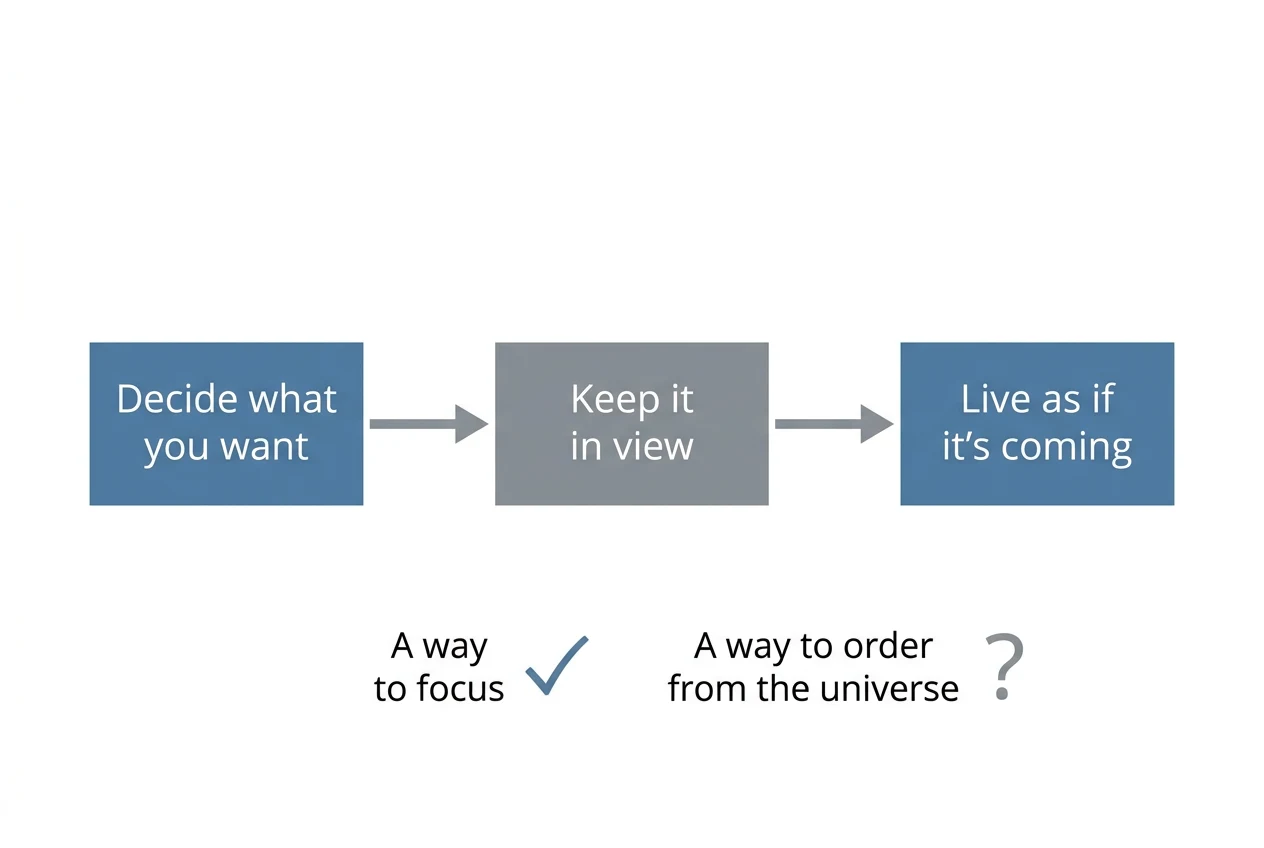
That belief is the part nobody has proven. The practice is simpler than the belief. You decide what you want. You keep it in view. You live as if it's coming.
If you treat it as a way to focus rather than a way to order from the universe, you lose nothing and you stay honest with yourself.
How to manifest: five steps for a first-timer
You don't need candles, a vision board or a special hour. You need about ten minutes and something to write with.
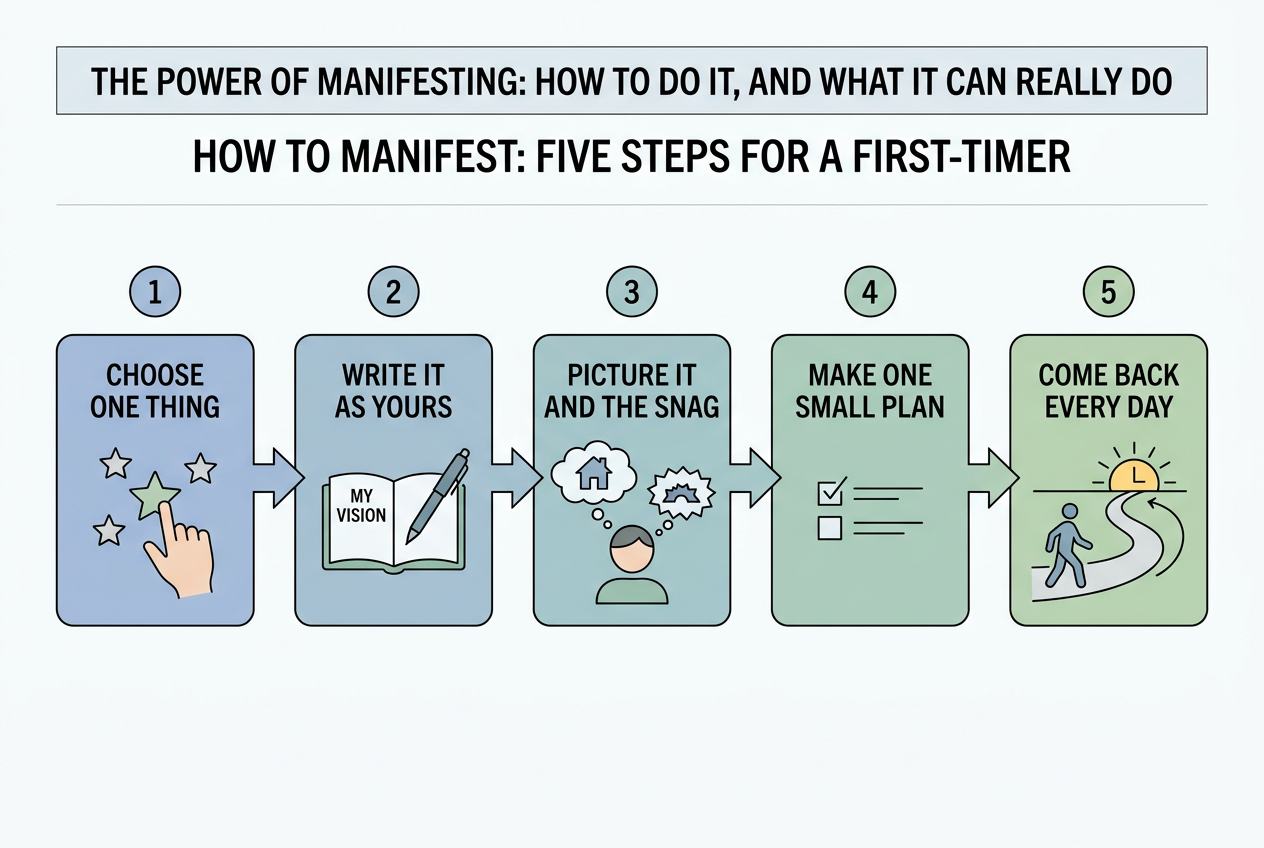
Step 1: Choose one thing
One wish. Not a list, and not a mood like "be happier". Make it something you could tell a friend in a sentence: a job you'd like, a habit, a move, a repaired friendship.
If you can't pick, ask which one you'd be sad to still be wishing for next year. That's usually it.
Step 2: Write it as if it's already yours
Put it in the present tense and make it sound like you. "I'm working as a project coordinator for a team I like." If that feels like a lie, soften it: "I'm becoming someone who…" is fine. The words of affirmation guide shows what makes a line feel true instead of forced.
Step 3: Picture it, then picture the snag
Sit for a few minutes and imagine it in detail. Where are you? Who's there? How does it feel? Then do the step most guides skip. Ask what stands between you and it. Maybe it's time, nerves, or a skill you don't have yet. Name the real one.
This is the part that decides whether manifesting helps or just feels nice. The next section explains why.
Step 4: Make one small plan
Pick one action and attach it to a moment. "When I finish lunch, I'll send one email." That's all. Small beats ambitious here, because a small step gets done on a tired Tuesday while a big one waits for a better week that never quite shows up.
Step 5: Come back every day
Spend a few minutes a day with your sentence, then do the action. Some people use the 369 method for this, writing the sentence three, six and nine times a day. Others sit quietly with a timer. On Manifest, the meditate page starts at 3 minutes and keeps playing with the screen off.
Pick the version you'll still be doing in two weeks.
The power of manifesting: what the research says
Now the honest part. The research doesn't show that thinking about something makes it appear. It does show something more useful.
Picturing alone can backfire
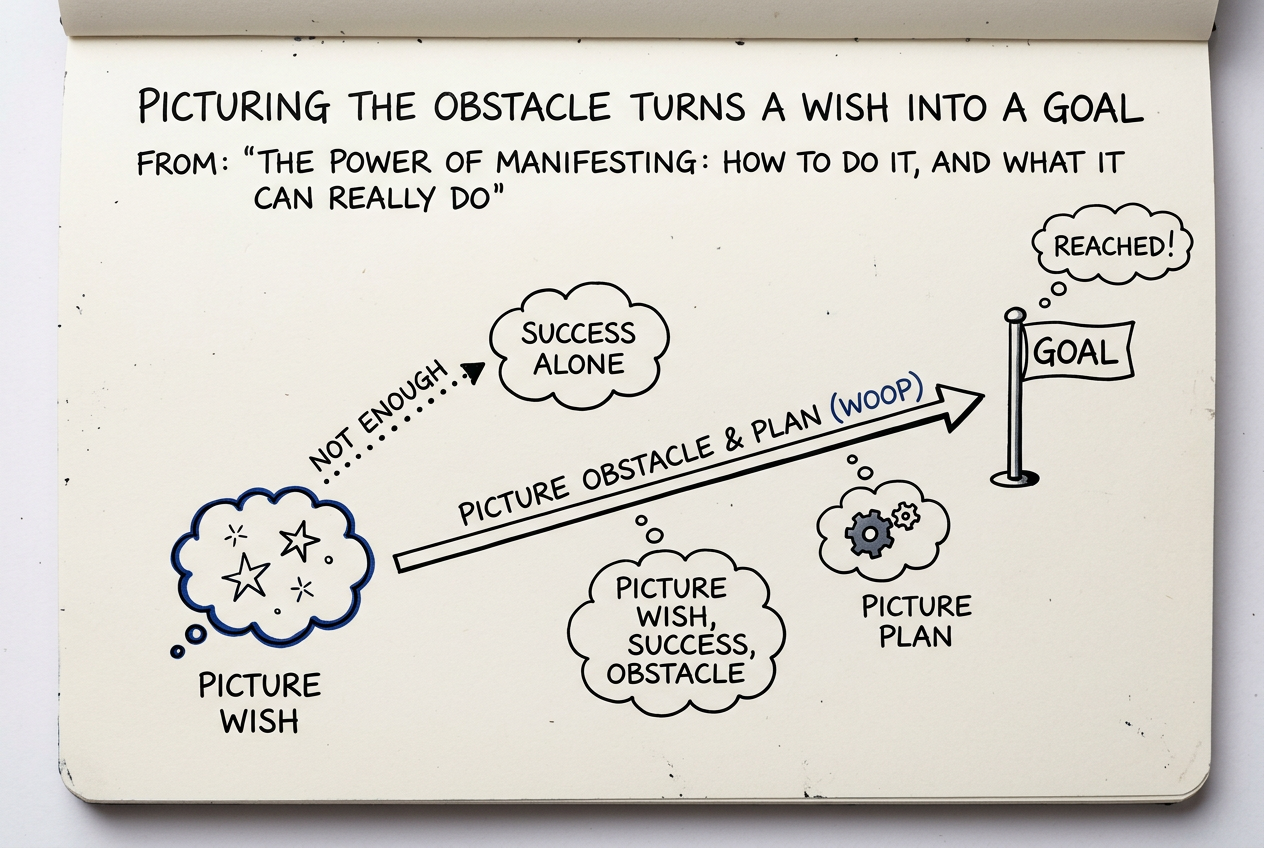
Psychologist Gabriele Oettingen has spent years studying positive fantasies. Her finding is blunt: the more positive a person's fantasies about the future, the less successful they are at realising them. Studies there found that positive fantasies led to lower energy and lower effort.
The reason is easy to see. If your mind has already enjoyed the win, it feels as if there's less to do.
That's not a reason to stop. It's a reason to do step 3 properly.
Picturing the obstacle turns a wish into a goal
Oettingen's fix is called mental contrasting, or WOOP: wish, outcome, obstacle, plan. You imagine the good outcome, then the thing in the way. The same review reports that this pairing links the wish to real action and produces determined goal pursuit.
Steps 1 to 4 above are a plain-language WOOP. That's deliberate.
A plan makes you more likely to act
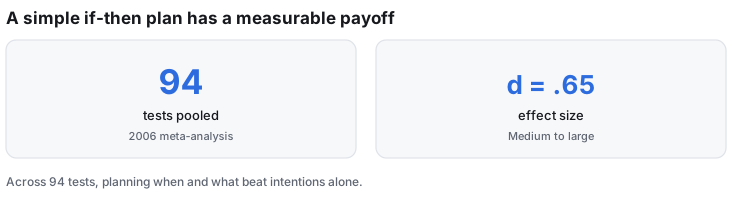
Peter Gollwitzer and Paschal Sheeran pooled 94 tests in a 2006 meta-analysis of "if-then" plans. Having a plan like "when X happens, I'll do Y" improved goal attainment over goal intentions alone, with an effect size of d = .65. That's a medium-to-large effect in psychology terms. Step 4 is built on it.
What it can't do
None of this shows that your thoughts move money, people or luck. I found no study that does. If a post promises an outcome, treat that as a claim, not a finding.
So the power of manifesting, put fairly, is this. It helps you choose, keeps the choice in view, and, done with the obstacle and the plan, makes you more likely to act. Acting is what changes things.
Common mistakes when you start
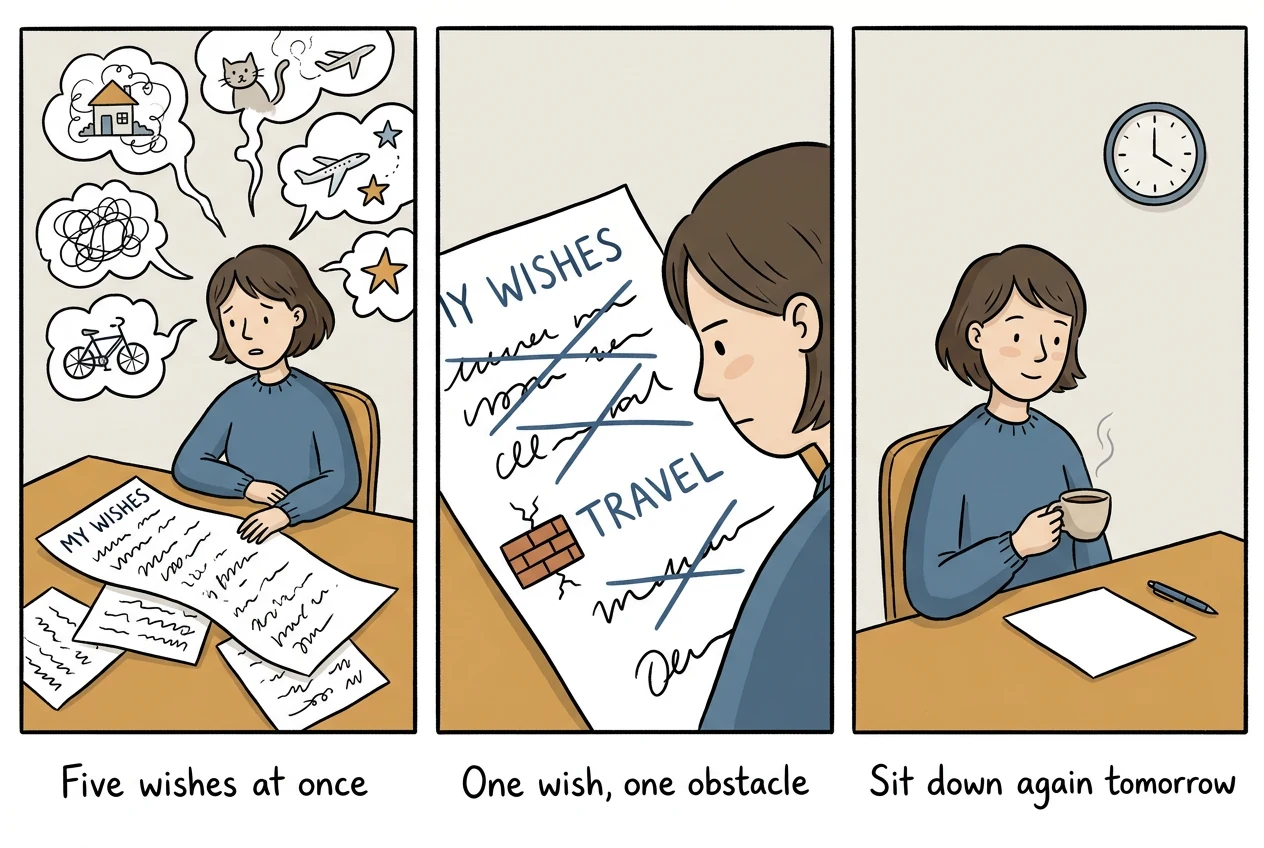
Wishing for five things at once is the big one. It scatters the attention you were trying to gather. Pick one and stay with it for a few weeks.
The second is skipping the obstacle because it feels negative. It isn't. It's the part that does the work.
The third is using it as a test you can fail. If a week goes badly, you haven't "done it wrong". You sit down again tomorrow.
And if an old hurt keeps crowding out the new wish, letting go of the past may need to come first. There's no rule that says you have to begin with a clean slate, but some people find they can't move until they've put something down.
Do your daily session in Manifest
If you'd like somewhere quiet to do steps 1 to 5, that's what Manifest is for. It asks one question: "What do you want?" One thing, then live like it's already yours.
Then you sit. The meditate page has a timer from 3 to 30 minutes and five background sounds, and it keeps playing with the screen off. Set it and put the phone down. Your streak and minutes sat stay on your phone, with no leaderboard.
Open Manifest and write your one thing
Your first ten minutes
Today, write your one sentence. Write the one thing in the way. Write one action and the moment you'll do it.
That's a complete first session. Tomorrow, read it again and do the action.