If you're low and looking for peace of mind, begin smaller than you think you need to. You don't have to feel calm today. You only have to get a little steadier than you were an hour ago, and that is something you can build.
In short: Peace of mind isn't a life with no surprises. It's being able to stay with a hard moment without being swept away. Start with your body, your next small step and one person.
When the ground moves
Maybe it was a phone call. A job that ended, a test result, a person who left, a plan that fell apart. Something happened that you didn't choose and didn't see coming, and now your mind won't settle.
Here is the part nobody says out loud. When you're already sad, a surprise lands harder because there's less room in you to absorb it, so if you feel like you're handling it badly, you're not. You're handling a big thing with a tired mind.
Nothing here will promise you a calm life. Life will keep surprising you. What can change is what happens inside you when it does.
What peace of mind actually is
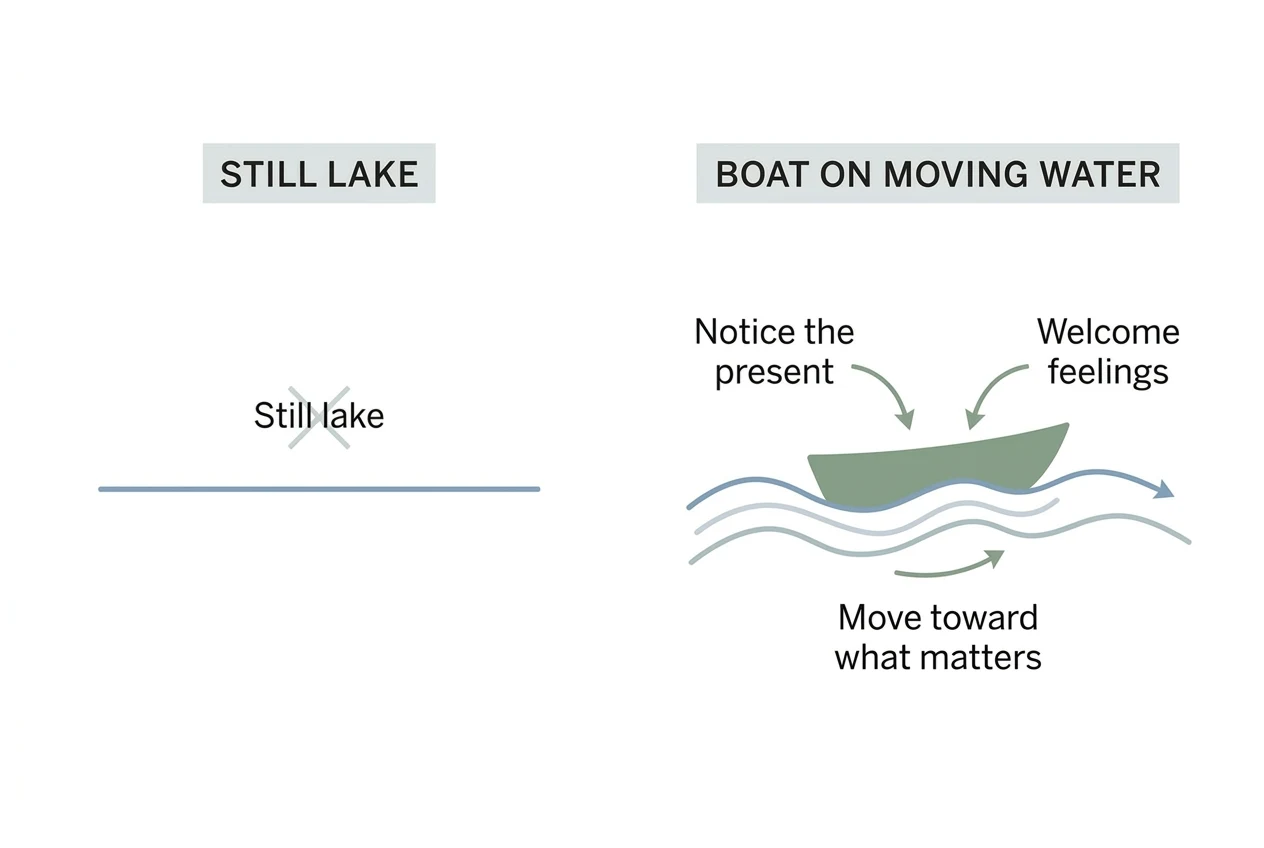
Most of us picture peace of mind as a quiet, untroubled feeling, like a still lake. Then a bad day comes and we decide we've failed at it.
A better picture is a boat on a lake that does move. Waves come. The boat stays upright.
Psychologists have a name for something close to this: psychological flexibility. One common description is being in touch with the present moment, aware of your feelings and thoughts, welcoming even the unwanted ones, and still moving in the direction of what matters to you. That's a long way from "think positive". It doesn't ask you to feel fine. It asks you to stop fighting the fact that you don't.
Some research points the same way. One study looked at how psychological flexibility acts as a buffer between major life events and depression symptoms. The idea is that an accepting stance toward what you feel may protect against some of the damage. It's one study, not a promise, and it doesn't mean sadness is a failure of acceptance. Still, it's a hopeful way to look at it, because it says you can get steadier without first getting happier.
Why the mind won't settle
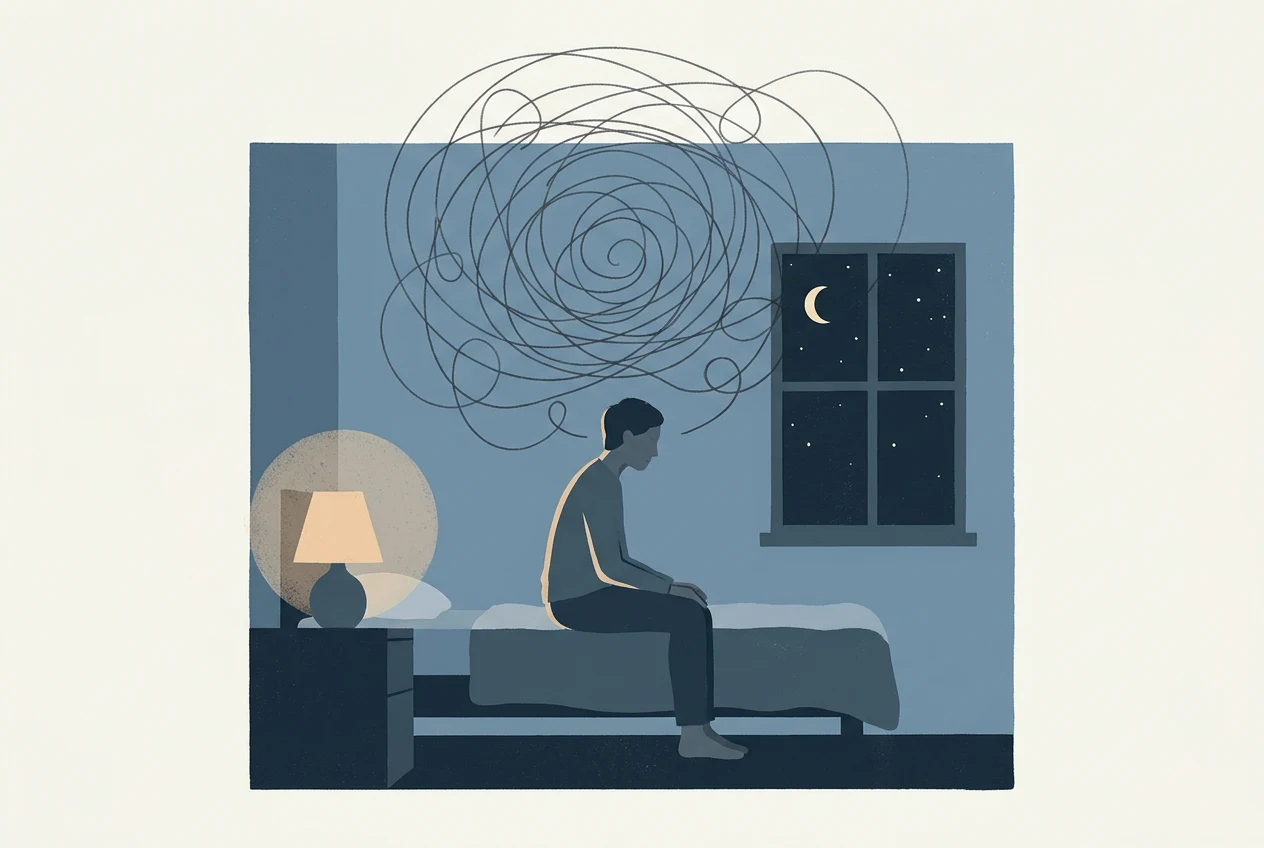
When something unexpected happens, your mind does what it was built to do. It scans for danger. It replays. It asks "what if" until three in the morning.
That's a mind trying to protect you, but it isn't very good at the job, since most of the "what ifs" have no answer yet. The loop feels like problem solving. Nothing is being solved.
If this sounds familiar, the post on how to let go of the past goes deeper into why replaying sticks and gives you a writing ritual for it. The ideas below are for the moment before that, when the news is fresh and everything feels loose.
Five small ways to get steady
None of these will fix what happened. They give you something solid to stand on while you work out what comes next.
- Come back to your body first. A racing mind is hard to argue with, so don't. Put both feet on the floor and notice the chair holding you up. Breathe out slowly, longer than you breathe in, and drink some water. It sounds almost too plain, but your body is the one part of you that is always in the present.
-
Name the feeling in one sentence. "I'm scared, and I'm sad, and I don't know what happens next." Say it, or write it. A feeling with a name is smaller than one that's just a fog. You're not agreeing with the feeling, you're just seeing it.
-
Separate what's real from what's imagined. Take a page and make two columns. In the first, write what has actually happened; in the second, write what you're afraid might happen. The second column is usually longer. Look at the first one. That's the ground you're standing on today.
-
Pick one small next step. Not the whole fix, just one thing you can do in the next hour. Make one call. Eat something. Put the washing on. When your life feels out of control, tiny actions give a little control back, and that's a real kind of peace.
-
Let one person know. You don't need the right words. "Today is a hard one" is enough. Being alone with a shaky mind makes it shakier. If there's nobody close, you can still reach someone, and the last section of this post says how.
What to do on the days you can't do any of it
Some days even five small things are too many. That's allowed.
On those days, lower the bar until it's almost silly. Get through the hour. Sit somewhere quiet for three minutes with nothing to fix. If you'd like help with that, the meditate page on Manifest has a timer that starts at 3 minutes, with a few background sounds if silence is too loud. It's a place to sit, and it doesn't promise anything.
Then let the day be what it was. Steady doesn't mean good. Some days steady is just that you stayed.
Keeping peace of mind when the next surprise arrives
There will be a next one. Here's how to get ready without living in dread.
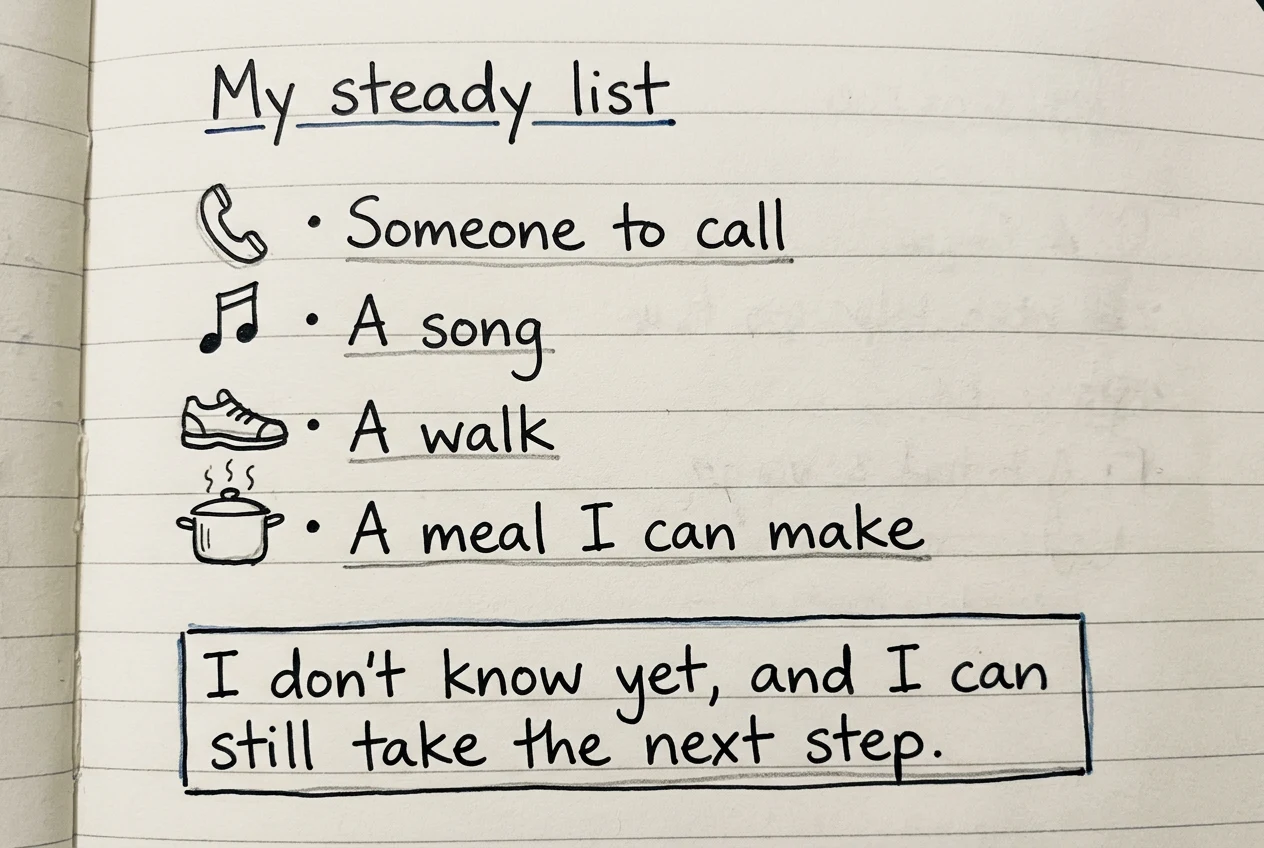
Keep a short list of what helps, and write it now, while you can think. A person to call, a song, a walk, a meal you can make. When the next hard moment arrives, you won't have to invent a plan from scratch.
Protect your basics. Sleep, food and some movement don't solve anything, but they make you less fragile when things get hard.
Rehearse "I don't know yet". Much of the pain in a surprise is the not-knowing, so practise saying it kindly: "I don't know yet, and I can still take the next step."
And be on your own side. The voice that says you should be coping better makes everything harder, and it helps to talk to yourself like a friend who's having a bad week. If it's hard to find the words, the post on words of affirmation has lines you can turn toward yourself.
When to ask for more than a post
Everything above is a companion, not a treatment. If you've felt low for a long time, if you can't sleep or eat, if you can't do the things you used to do, or if you're having thoughts of harming yourself, please reach out to someone trained to help.
In the US, you can call or text 988, or start a chat online, to reach a trained crisis counselor. The line is open for anyone in emotional distress, and you don't have to be in a crisis to use it. The National Institute of Mental Health also suggests bringing up your concerns with a primary care provider and asking for help. And if the first treatment doesn't feel right, say so. The same page says to talk with your provider if you feel like the treatment is not helping. You're allowed to keep looking.
You don't have to feel at peace today. Feel your feet on the floor, take the next small step, and tell one person. That's enough for now.